If you have missing teeth, you may know that dental implants are a great replacement. This type of dental restoration consists of several parts that will restore the function and aesthetics of your smile. Seaside Family and Cosmetic Dentistry offer teeth implants in Hampstead, NC, for people missing any number of teeth. But what are implants made of, and how are they different from other tooth replacements?
What are Dental Implants?
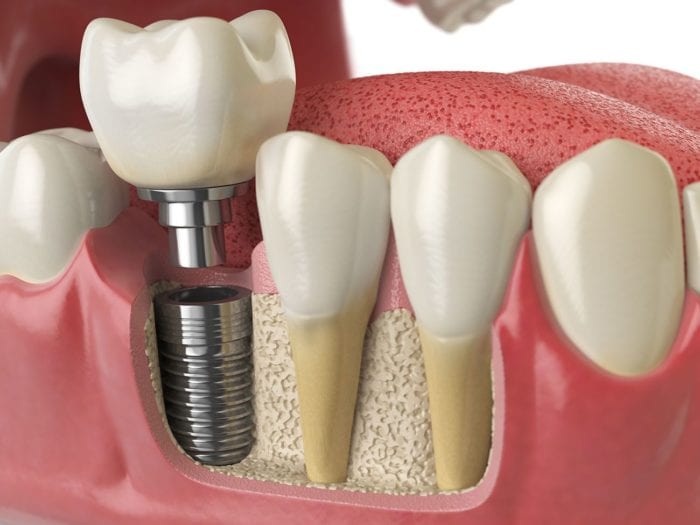
A dental implant is a prosthetic replacement for a missing tooth. Natural teeth consist of the crown and the root. The crown is the visible part, and the root is embedded in the jawbone.
The only solution to replace and replicate natural teeth is a dental implant restoration. The three parts that make up dental implants are the implant post, the abutment, and the dental prosthesis. Continue reading to learn about the parts of a dental implant restoration.
The Implant Post: The Artificial Tooth Root
The implant post is the foundation of a dental implant and what sets it apart from other tooth replacement options. Our surgeon will implant a small, screw-like rod in the jawbone. The post will serve as a replacement tooth root and offer a stable base for the dental prosthesis.
Dental implant posts are constructed from titanium, a biocompatible material that allows the post to fuse to the jawbone. This fusion creates a strong bond so the implant is secured in place.
Dental implants come in several sizes to accommodate different needs, such as jaw sizes and bone availability. Implants are measured in diameter and length. Common diameters range from about 3 to 5 millimeters, while lengths can vary from around 6 to 16 millimeters.
The precise implant size you need depends on your bone structure, the location of the missing tooth, and overall oral health. During your consultation, Dr. Francis or Dr. Fuller will assess your oral health. Then they’ll determine which size you need.
The Abutment: Connecting the Implant Post and Dental Prosthesis
The abutment attaches the implant post to the dental prosthesis. We secure it to the implant, which will protrude above the gum line, acting as a platform for the crown, bridge, or denture.
Abutments provide stability and support for the prosthesis so you can properly bite and chew. They also help maintain the health of the gum tissue.
Several types of abutments are available for different clinical situations. The type you need depends on the implant’s position, your oral health condition, your budget, and your desired results.
Stock abutments only come in standard sizes and shapes. They’re prefabricated, readily available, and cheap. But they aren’t best for complex cases.
Custom abutments are made based on the patient’s needs. While they cost more and aren’t as widely available, they offer a precise fit and better aesthetics.
Dental Prosthesis: Replacing Your Missing Teeth
The dental prosthesis is the visible part of a dental implant. We use digital imaging design it to mimic the appearance and function of natural teeth. Several types of restorations are available, but the one you need depends on how many teeth you are missing and where they are in your mouth.
Dental Crown
A dental crown will sit on a single dental implant post. It’s the best choice to replace one lost tooth. We design the crown so it blends in with your surrounding teeth and looks natural.
Dental Bridge
A dental bridge will replace several teeth in a row. The custom bridge consists of two anchor crowns on both ends and pontics between them. Our dentist will secure crowns to at least two dental implants.
Denture
We recommend a denture to replace a row or full arches of missing teeth. An implant denture requires anywhere from 2 to 8 implant posts. You can also get All-on-4, which uses as few as 4 implants per arch.
Frequently Asked Questions
Read answers to popular questions about dental implants in Hampstead, NC.
Will the dental implant procedure be painful?
Most patients report little discomfort during the procedure, as local anesthesia is used to numb the area. You might feel mild soreness or swelling for a few days afterward, which can be managed with over-the-counter pain relievers. The healing process is generally smooth, and any discomfort usually fades quickly. Always follow our office post-op care instructions.
What foods should I avoid while healing from implant placement?
Stick to soft foods for the first few days after surgery. Avoid hard, crunchy, or sticky foods like nuts, chips, or caramel that could irritate the site. We suggest you avoid hot foods and drinks until the numbness wears off. As healing progresses, you can gradually return to your normal diet with guidance from Dr. Francis.
How soon can I return to work after getting dental implants?
Most people can return to work within one to two days after implant surgery. If you receive multiple implants or need procedures like a bone graft, you might need more recovery time. Mild swelling or discomfort may be present, but it won’t interfere with daily tasks. We’ll give you more specific advice based on your treatment.
How do dental implants compare to traditional bridges or dentures?
Dental implants offer more stability and longevity than traditional bridges or dentures. They fuse with your jawbone, providing a strong foundation that mimics natural teeth. Implants don’t require altering neighboring teeth like bridges do, and they help preserve bone. They also eliminate the slipping or clicking that can occur with dentures.
Will my dental implant look exactly like a natural tooth?
Yes. A well-designed dental implant crown is made to match your natural teeth in color, shape, and size. It blends seamlessly into your smile. The materials used are durable and highly aesthetic, giving the implant a lifelike appearance. Most people won’t be able to tell the difference.
Are implant-supported dentures more secure than traditional dentures?
Yes, implant-supported dentures offer dramatically better stability than traditional dentures that rely only on suction and adhesives. Just 2 to 4 implants can secure a full denture that won’t slip when you eat or speak. You can chew tougher foods and speak confidently without worrying about embarrassing movements. The implants also prevent continued bone loss, which makes traditional dentures increasingly loose over time.
Make an Implant Consultation in Hampstead, NC
Contact Seaside Family and Cosmetic Dentistry to book a consultation with Dr. Francis or Dr. Fuller. You can reach us at 910-335-4392. Feel free to request an appointment with us online.
Visit these pages to learn more about dental implants: